


Learning & Participation
STUDENT ART ARCHIVE (UK)
As part the workshops, local artists guided participants in exploring their personal connections to the theme It’s Not Easy Being Green helping them draw out ideas and emotions and translate these into art.
Each school approached the work differently: some collaborated on large, co-created pieces, while others developed individual concepts that were later incorporated into the final billboard artworks. Here you can see a selection of pieces created by the young people during the workshop process.
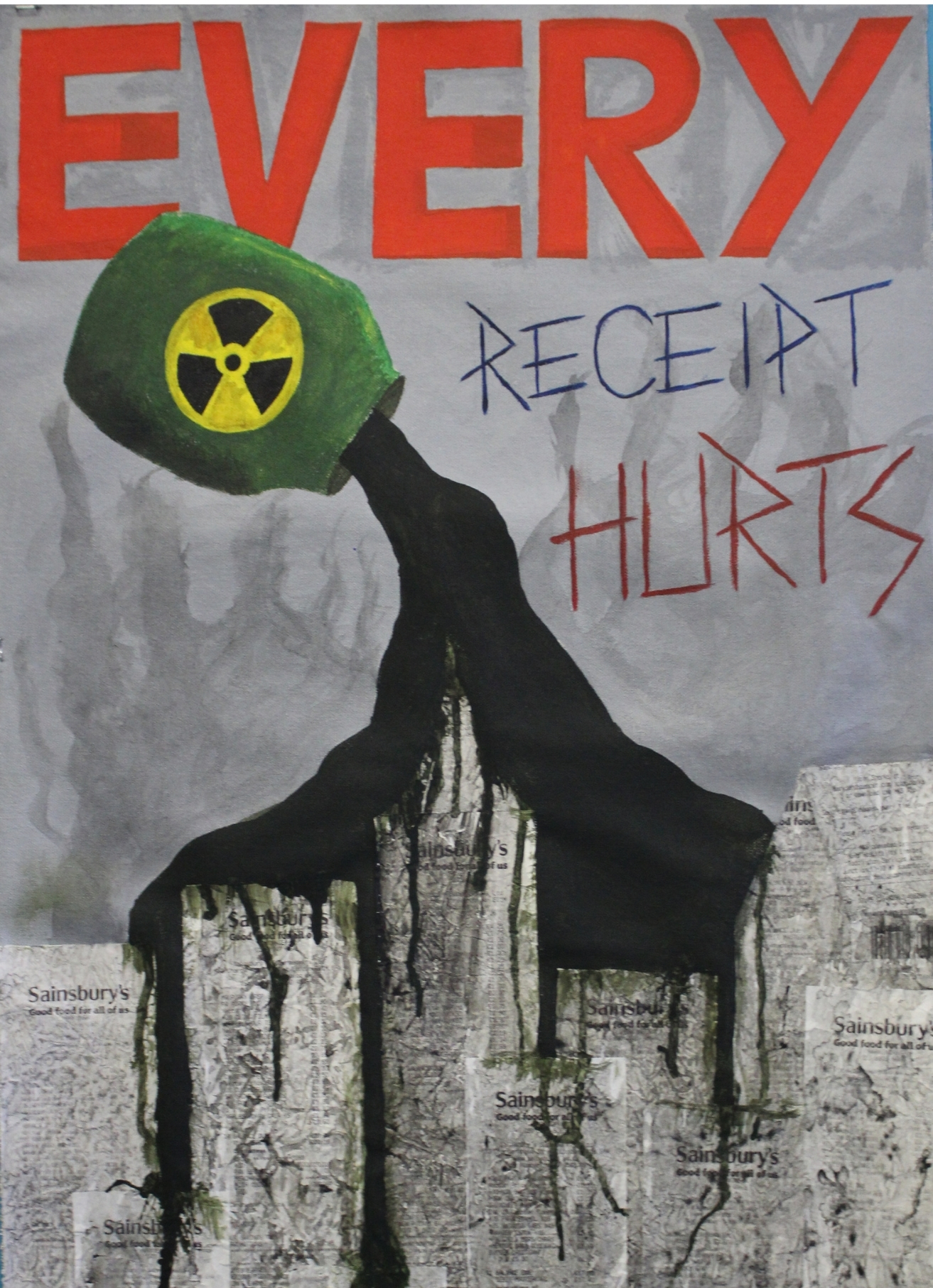
My painting Every Receipt Hurts explores how everyday consumer habits contribute to environmental destruction. The city in the piece is built from real receipts to show how modern life is based on constant buying, while the crude oil spilling from the drum represents pollution, greed, and overconsumption. The bold text is meant to feel like a warning, reminding viewers that even small purchases have hidden environmental costs.
Jess
Greig City Academy
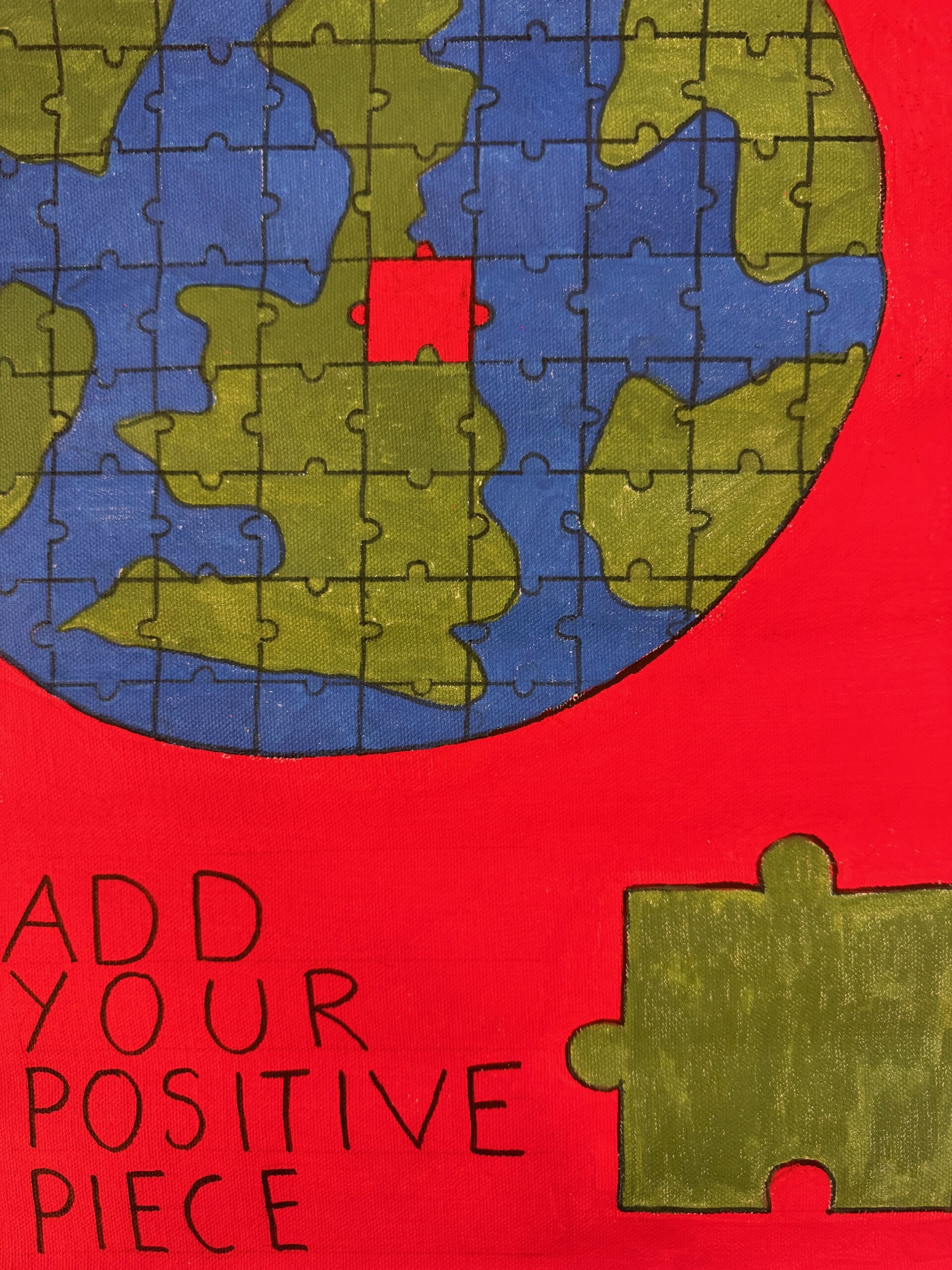
This poster represents the way that people play into societal expectations in order to fit in. It’s designed to promote environmental advancements by promoting positive change. The green puzzle piece suppresses the burning fire beneath – symbolic of the fire we must suppress together.
Maia
St Saviours & St. Olave’s School
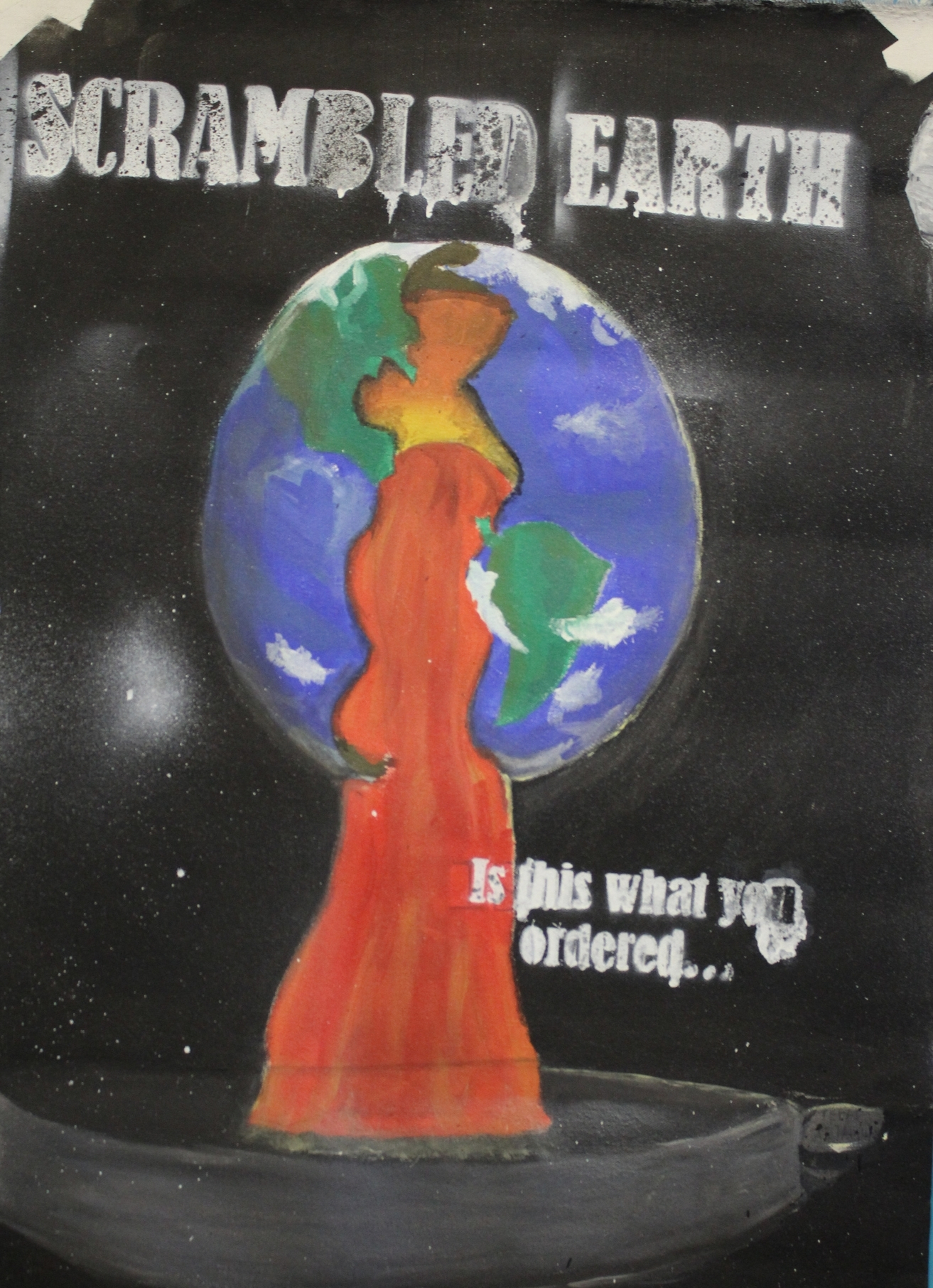
My piece Scrambled Earth is a surreal warning about the damage humans are doing to the planet. I painted the Earth cracking open like an egg and spilling into a frying pan to show how we’re literally “cooking” our world through climate change and careless behaviour. The spray‑painted text, “Scrambled Earth” and “Is this what you ordered?”, is meant to feel confrontational, as if questioning the viewer’s role in the crisis and whether our current lifestyle choices are leading to this outcome.
Joseph
Greig City Academy
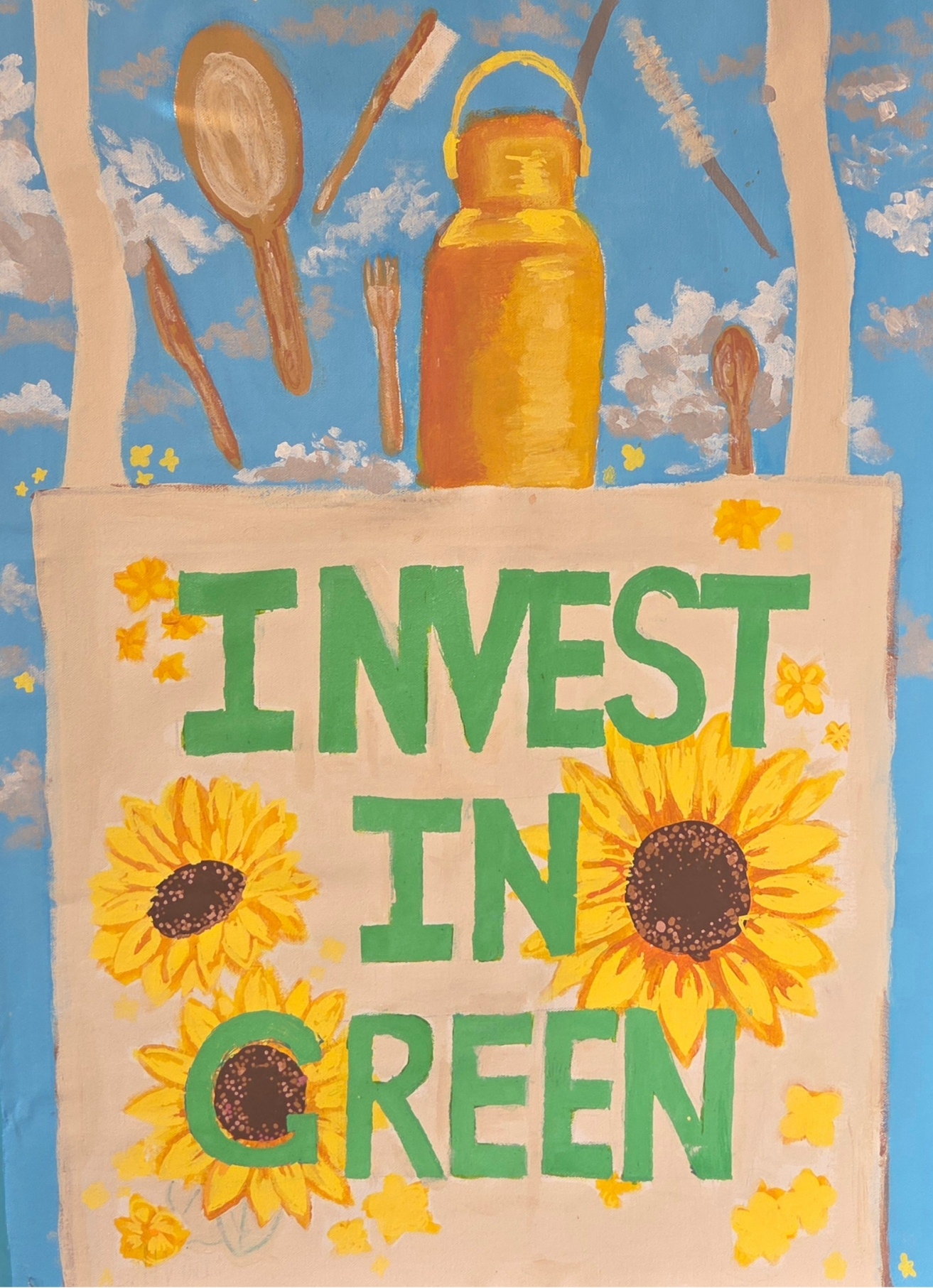
My poster is meant to combat beliefs that one person can’t make a difference to reduce climate change when we as consumers can make the active choice to promote companies and products that are environmentally sustainable, effectively investing in green. The bright yellow sunflowers, the sky background work together to convey a sense of hope despite the anxiety and fear around the current climate crisis.
Kafirah
Greig City Academy
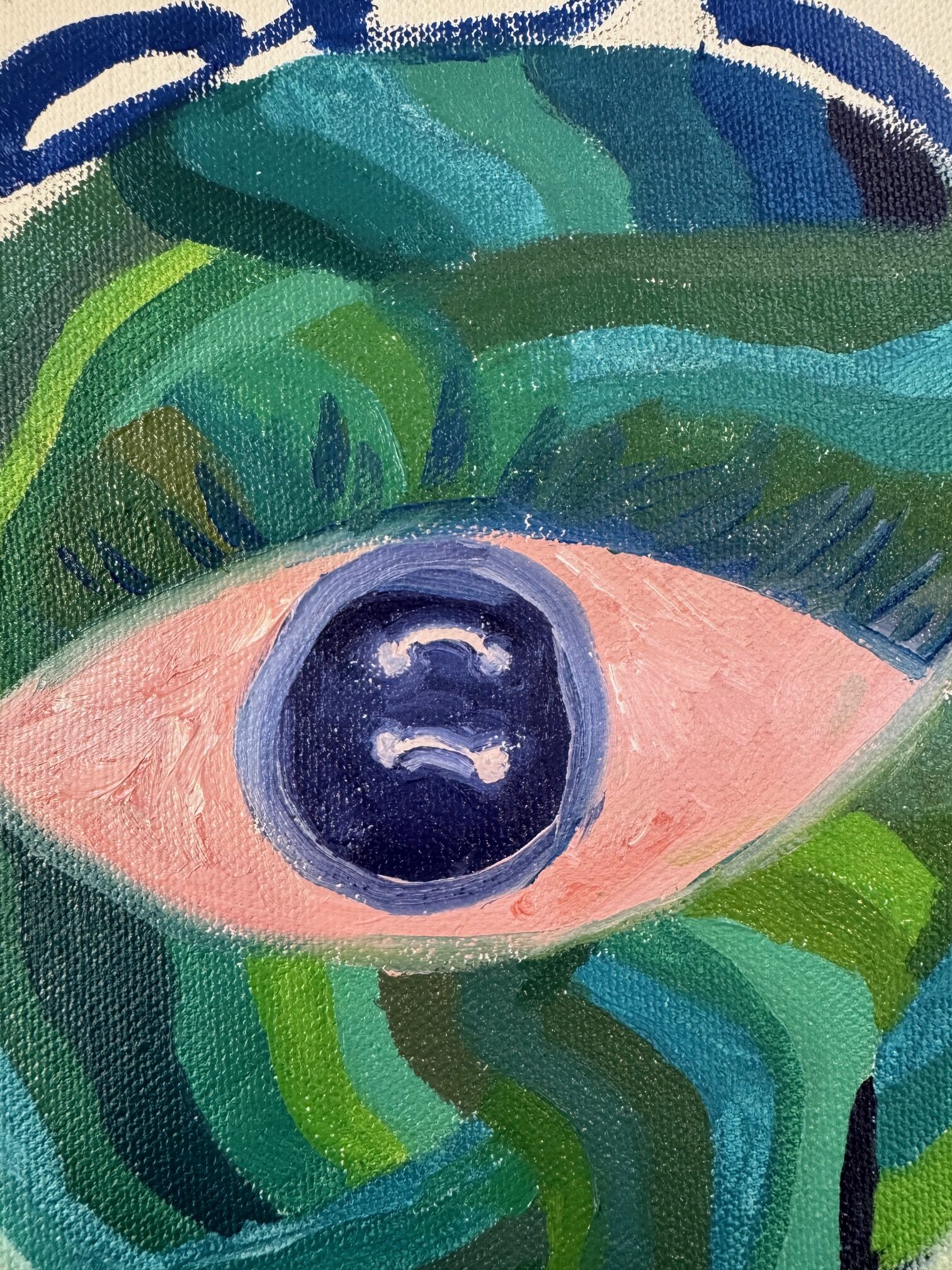
I wanted to do something a bit more abstract that isn’t as explicit ‘save the world’. I wanted to combine elements that seem to look like a jungle and water flowing and twisting together because everything in the planet is interlinked. The eye is red because I wanted to make it look like the person had been crying because of the state of the world. The iris is a button to represent that the person took priority of their enjoyment over the health of the planet and they realised how big their impact is.
Arina
St Saviours & St. Olave’s School
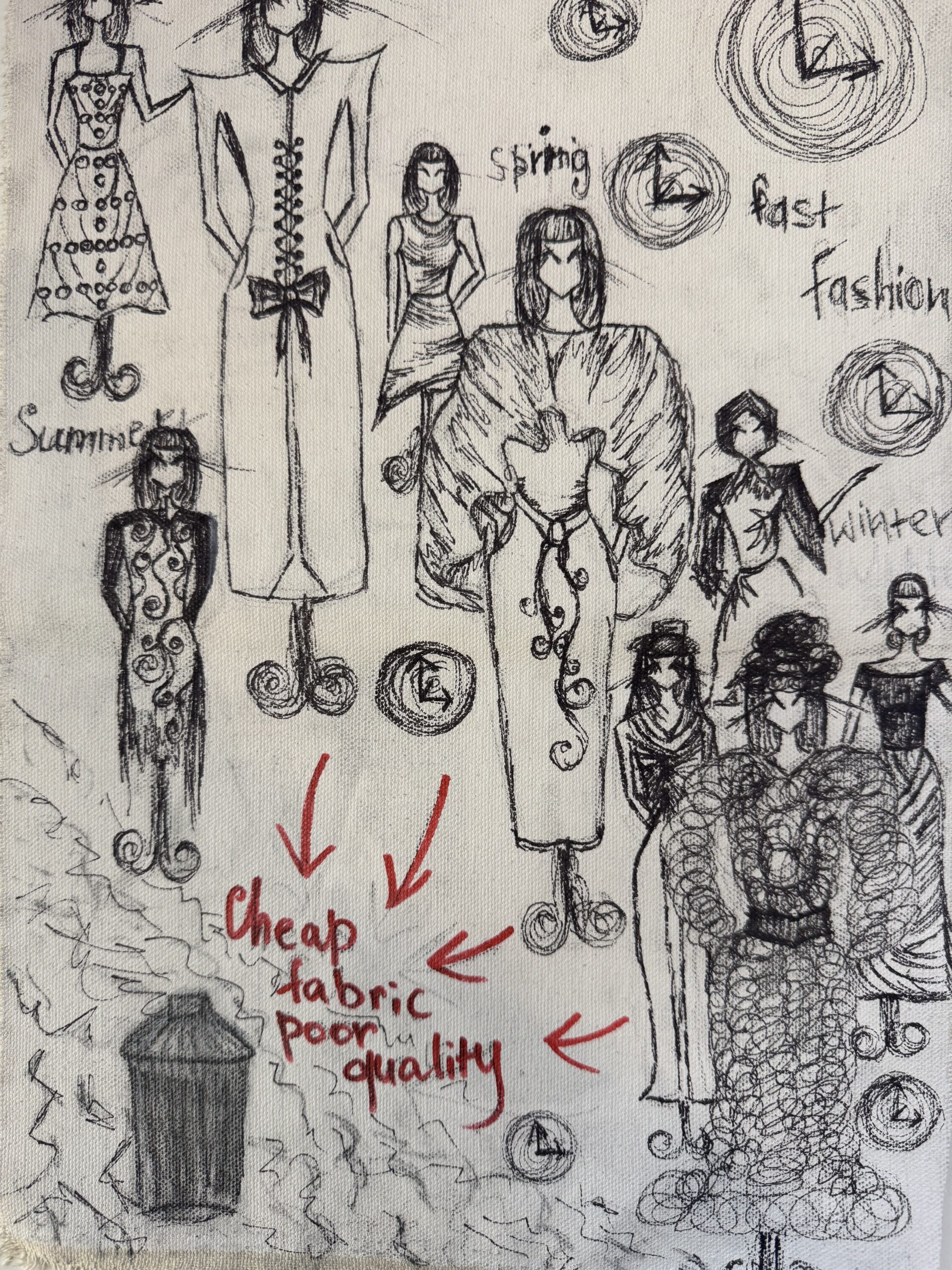
I am really interested in fashion, but I also know that fast fashion is one of the biggest culprits of global warming. Here I have shown how fashion is constantly changing but the materials that are being used are cheap and often made of plastic. People try to keep up with the fashion that is always coming out so they are buying the cheapest versions and because it is cheap the clothes does not last, and ends up in bins because it’s not even worth reselling. I made this poster hoping people will think more about where they are buying from.
Amina
St Saviours & St. Olave’s School
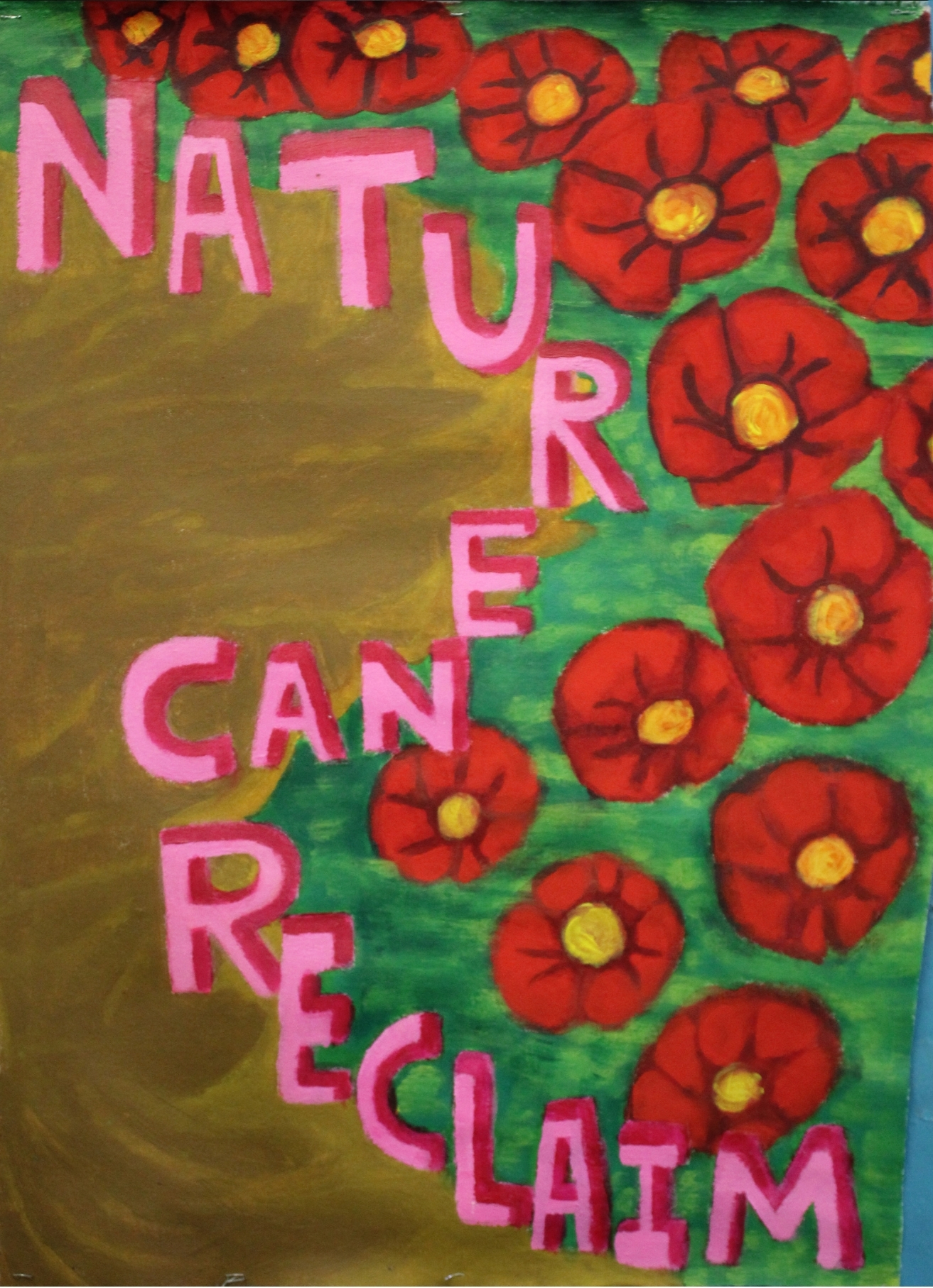
My painting contrasts environmental destruction with the possibility of renewal. On the left, I showed dark oil and pollution to represent the damage humans cause, while on the right I painted bright, bold poppies to symbolise nature’s ability to recover. The phrase “nature can regrow” in bright pink sits between the two sides as a hopeful message, reminding viewers that although the environment is harmed, it still has the power to heal if we allow it to.
Piotr
Greig City Academy
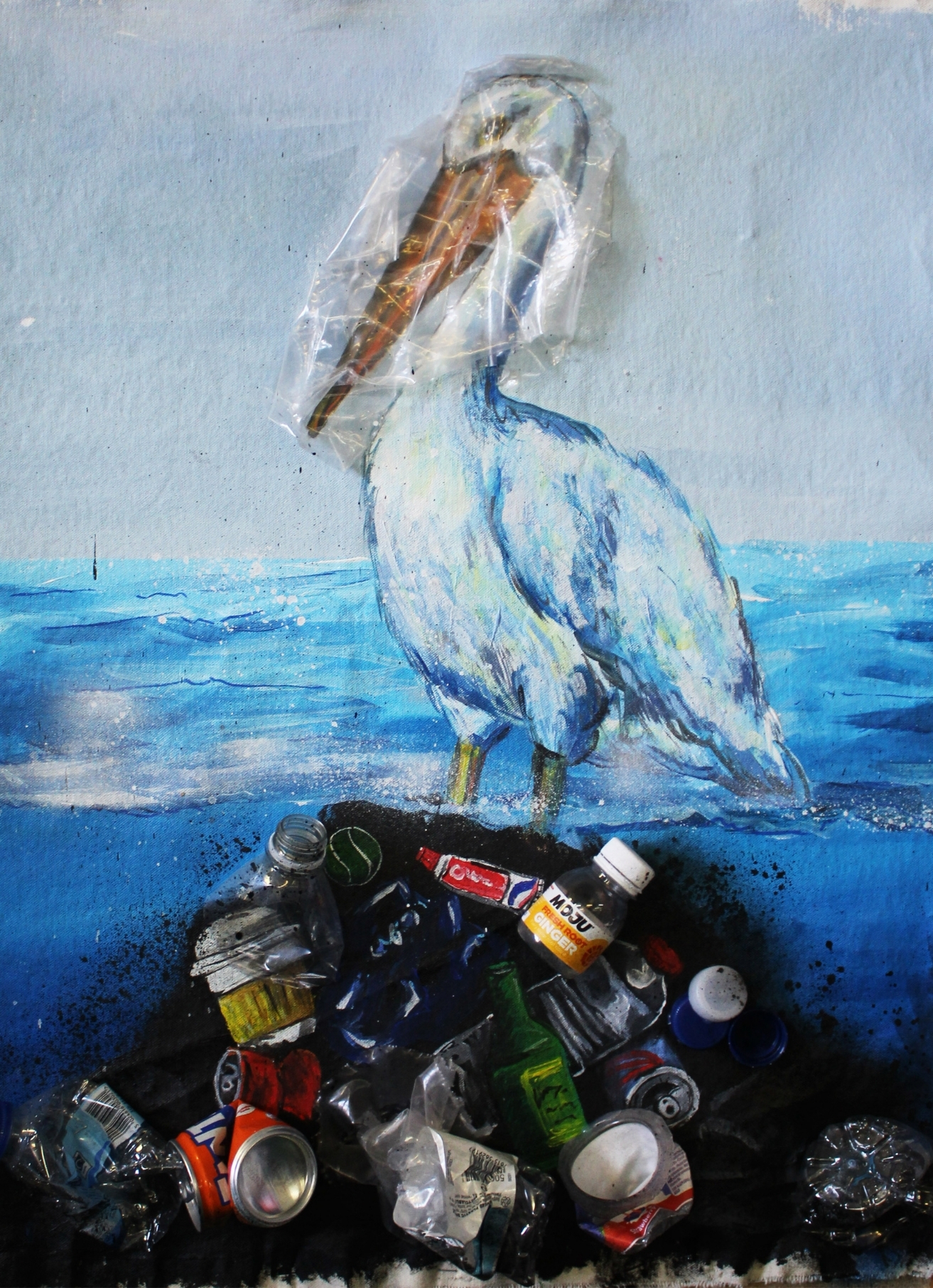
My piece shows a seagull standing on a pile of human pollution floating in the ocean, with some of the actual rubbish and single use plastic actually attached to the painting. I wanted to highlight how everyday waste ends up in the sea and becomes part of wildlife’s environment. By using real discarded materials, the artwork feels more confronting and makes the viewer see the impact of pollution in a direct, physical way.
Alice
Greig City Academy
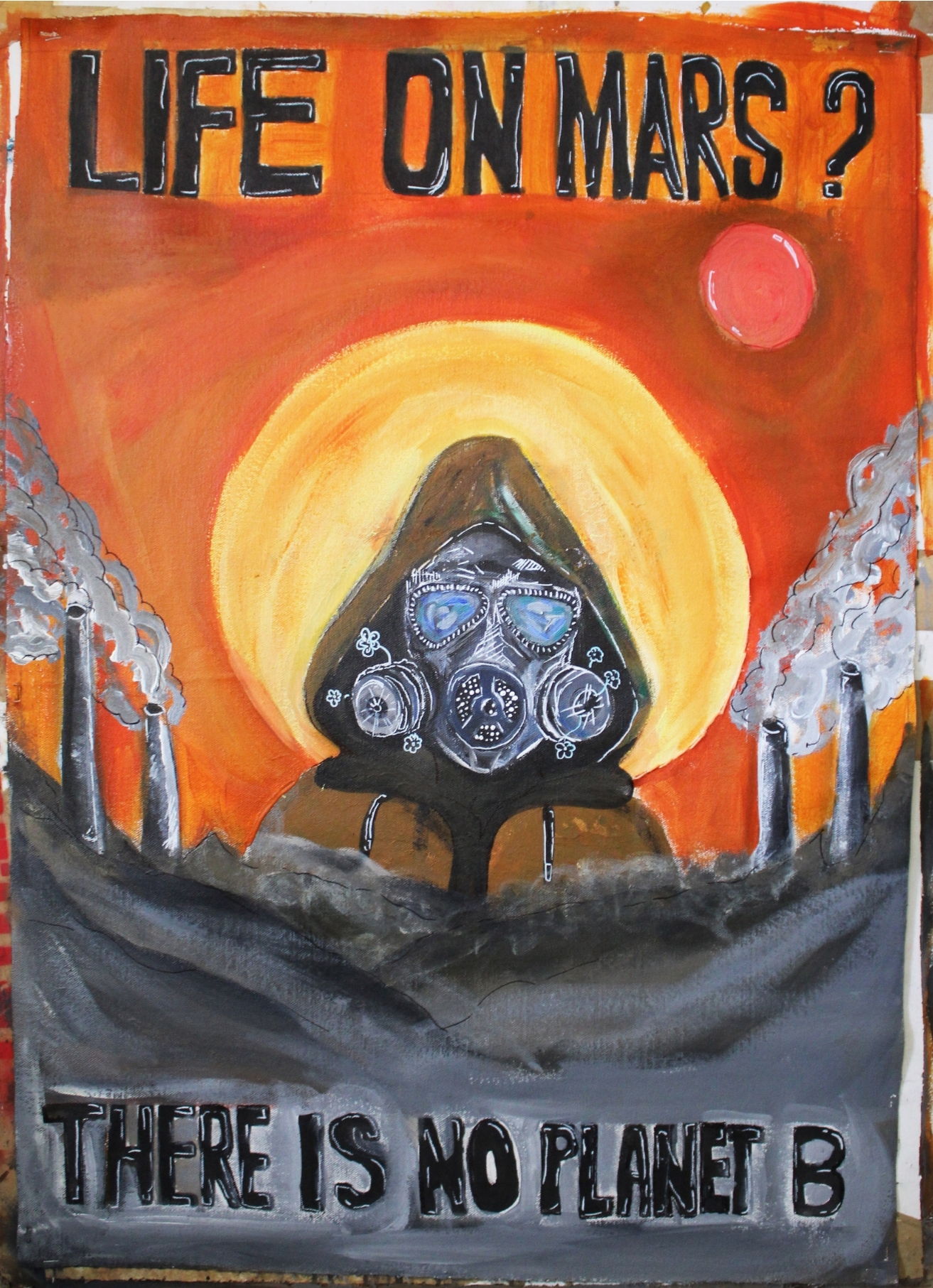
My artwork imagines a future where Mars looks just as damaged as Earth. The red‑orange background represents the harsh, barren landscape, while the hooded figure wearing a gas mask symbolises how unliveable the environment has become. Around the figure I painted factories, toxic chemicals and pollution to show that if we repeat the same mistakes, we could destroy any world we touch. The text “Life on Mars? There is no Planet B” is a warning, reminding viewers that we can’t escape the consequences of environmental damage and that protecting Earth is our only real option.
Mia
Greig City Academy
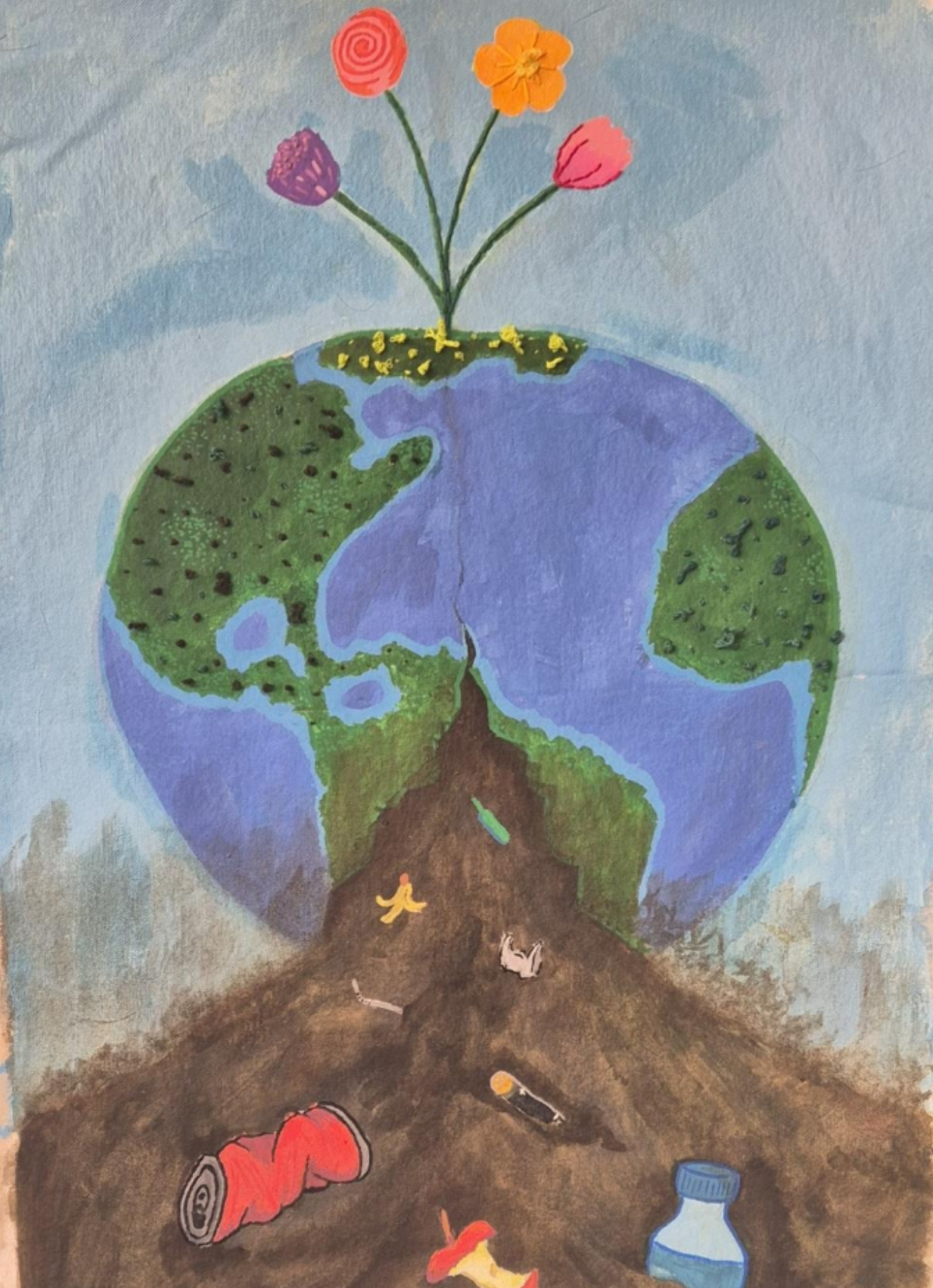
My artwork shows the planet Earth cracked open and leaking oil to represent the damage humans have caused through pollution and overuse of natural resources. Above the broken planet, I embroidered plants and flowers to symbolise hope and the possibility of regeneration. By combining painting with embroidery, I wanted to contrast the harshness of the oil with the delicate, careful act of stitching, showing that healing the planet requires patience, care and action.
Jayden
Greig City Academy
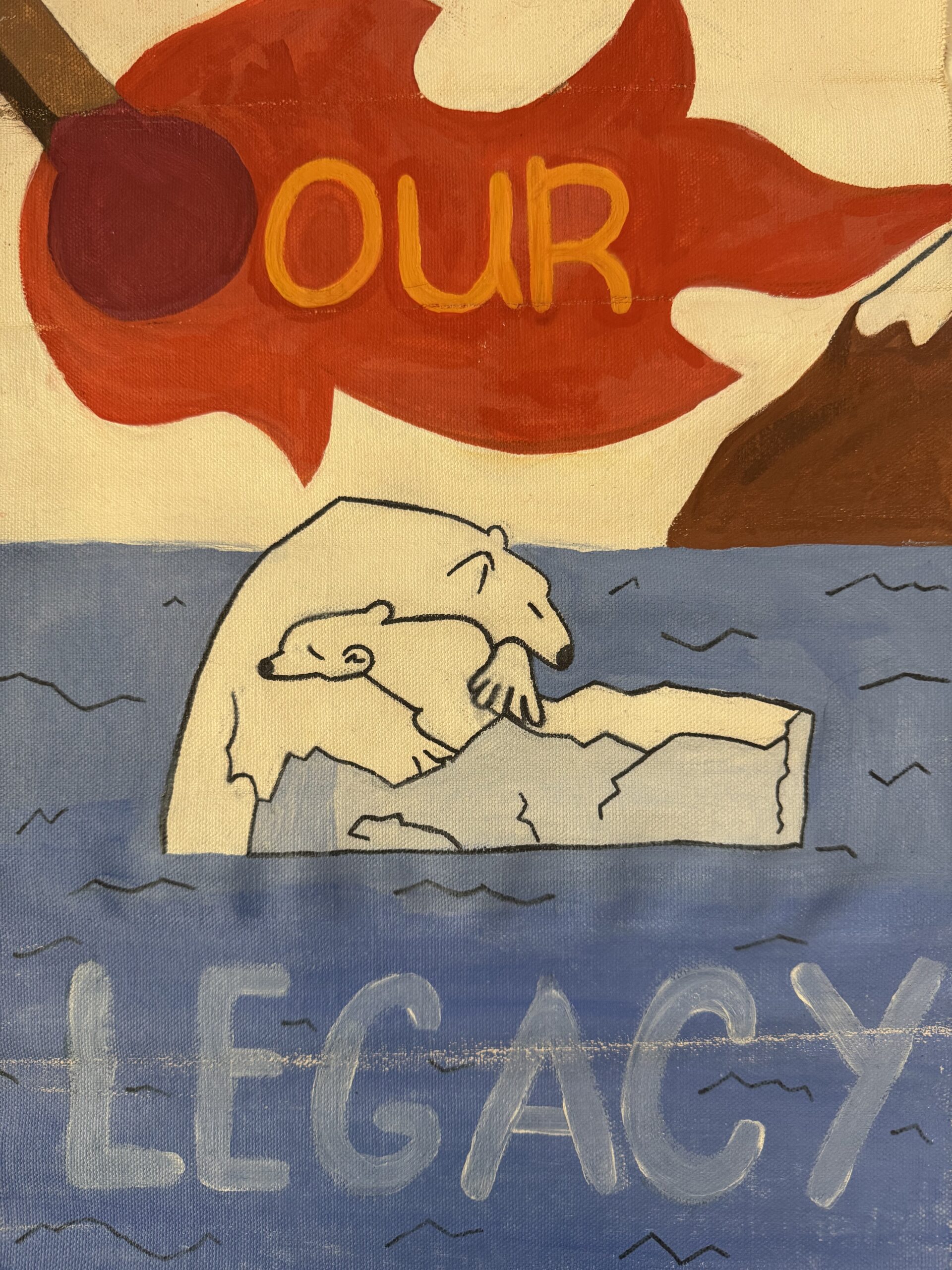
I chose to do a poster that involves polar bears clinging to each other as the ice caps melt. This is an image that we have seen before but with real polar bears. I decided to do this because this always makes me feel sad and emotional, innocent animals are dying because of us. They did not choose this, and they’re now paying the biggest price of all. I want people to feel guilty and bad, because it is bad
Sofia
St Saviour's and St Olave's School
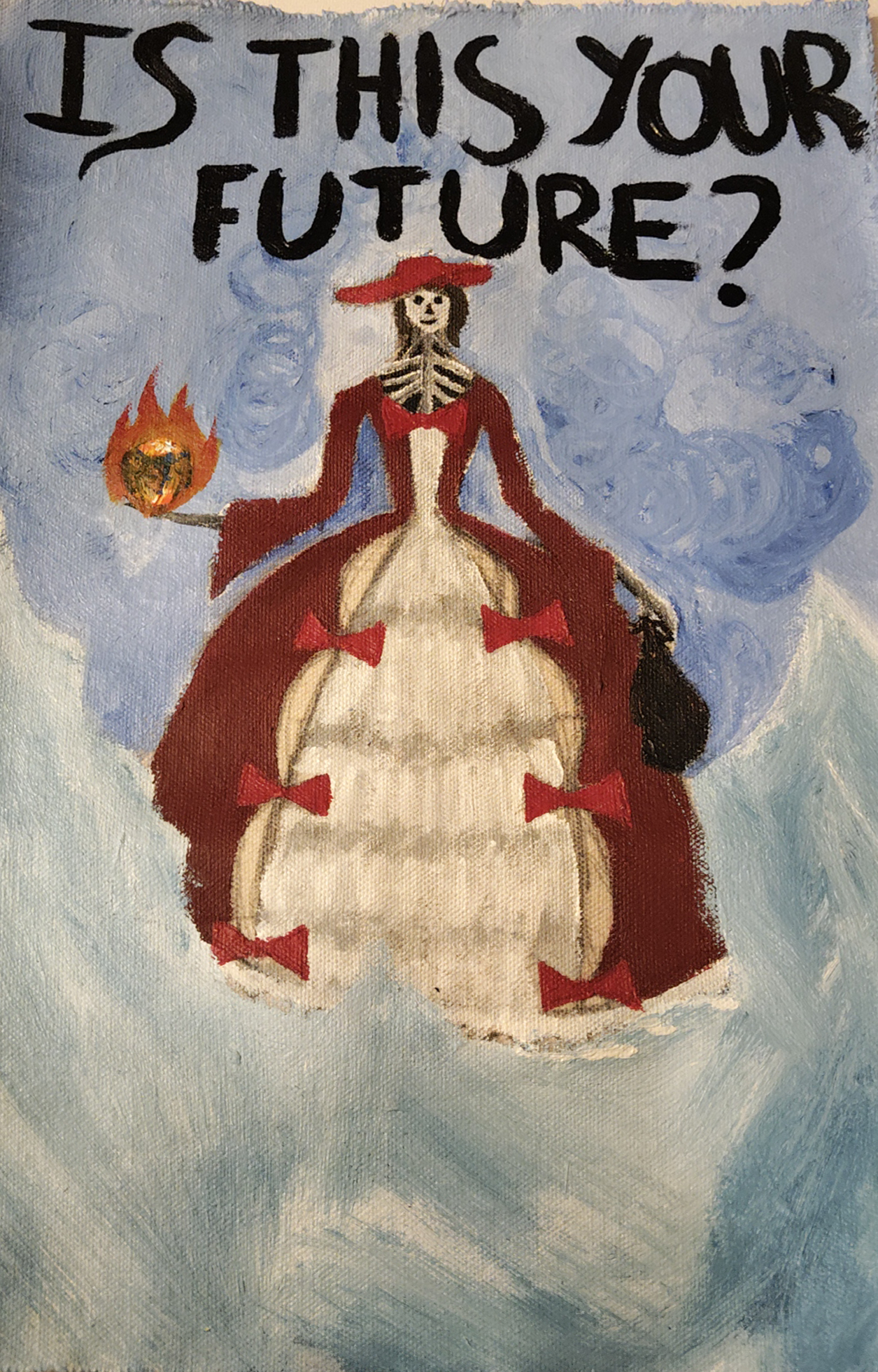
‘I wanted to make a poster that shows the reality of what our individual impact on the planet has. We see so many influencers showing their hauls from fast fashion websites but we also know that this is destroying the planet. People used to inherit heirlooms but with people buying cheap things so they can have more, there is nothing to inherit and it is costing us the earth’