


Learning & Participation
IT’S NOT EASY BEING GREEN
As part of The Gallery Season 5, It’s Not Easy Being Green, 60 young people from four secondary schools in London and Rio collaborated with a local artist to co-create artworks reflecting their perspectives on climate change and the environment. The final pieces you see here are being showcased on billboards in both cities from 2 March 2026.
During the project, an international online exchange connected the young participants from Brazil and the UK. Not only did this give them the opportunity to celebrate the project, but it also provided them a platform to share cultural and regional perspectives on environmental issues and to discuss their creative processes while developing their artworks.
This project has been achieved in collaboration with the British Council Brazil.
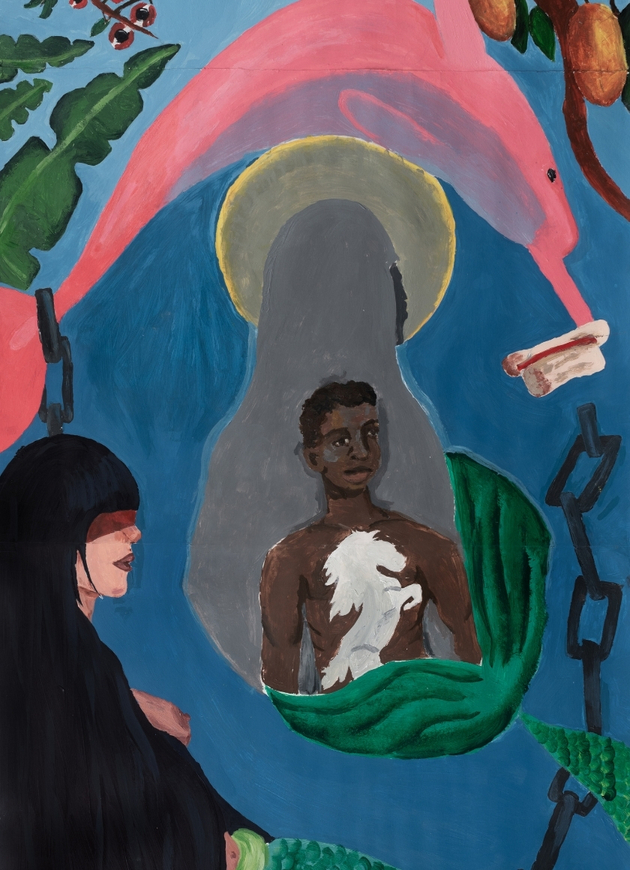
Untitled, 2026
The scene is crafted as a meeting place, where myths from Brazilian folklore share the same symbolic space. Iara appears as an aquatic and enchanting presence; the pink river dolphin crosses the composition as a figure of metamorphosis and seduction; and Negrinho do Pastoreio [a famous Afro-Brazilian, Catholic-influenced folk legend from the 19th-century, considered a protector of the lost] appears as a living memory, marked by pain, but also by the dimension of the sacred and the miraculous. Guarana, banana leaves and vegetation intertwine with the bodies, as if the landscape itself were participating in the narrative. Everything flows at the same rhythm, dissolving the boundaries between nature and myth, and transforming the work into a landscape of memory, silence and permanence, where ancestral stories continue to echo.
School: Colégio Estadual Ignácio Azevedo do Amaral
Artist: Marcela Cantuária
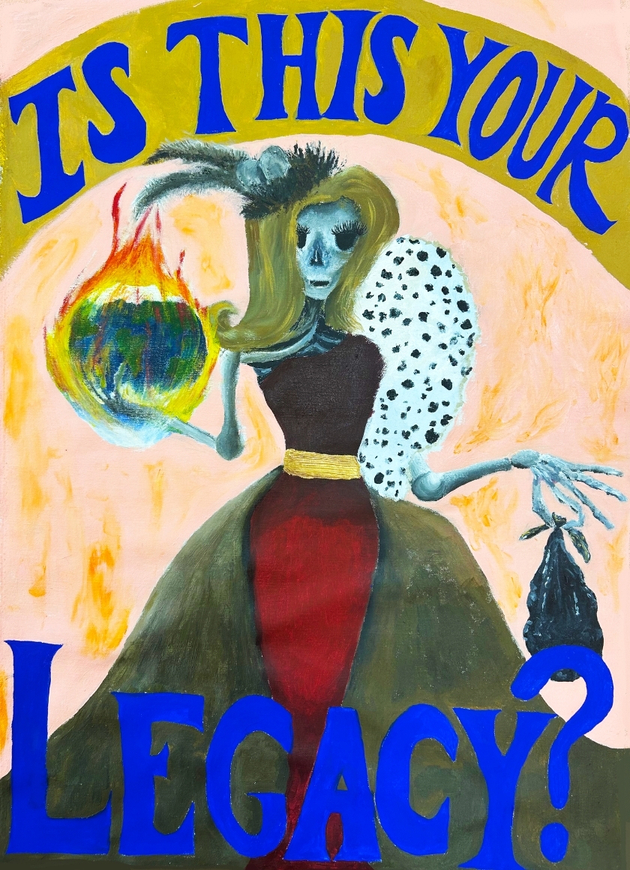
Is This Your Legacy?, 2026
The burden of responsibility is on you. This legacy of greed and destruction leaves current and future generations with a desperate sense that this is our last chance to act before we succumb to decay.” ‘Is this your legacy?’ prompts feelings of shame and guilt directed at generations of destruction or apathy towards the climate crisis. It demands that we pay attention and reflects the anger that young people are feeling towards this inherited chaos that they didn’t choose. The work insists that we don’t look away and with that, resist, engage, mobilise for change today.
School: St Saviours & St. Olave’s School
Artist: Annie Frost Nicholson
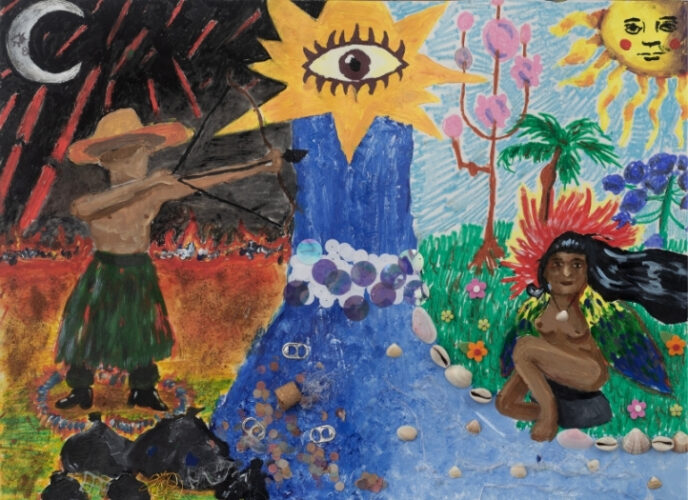
Untitled, 2026
The work creates a direct contrast between destruction and life. On one side, the landscape is in flames, marked by rubbish and the figure of the hunter/deforester, his face hidden and his feet clad in shiny shoes, which denounce predatory human action. On the other, there is a territory of care and enchantment, inhabited by a feminine spirit of the forest, reminiscent of Comadre Fulozinha [a protective spirit of the woods from Brazilian folklore, specifically popular in the Northeastern sertão], at one with nature and surrounded by water, flowers and trees. The use of disposable materials combined with natural elements reinforces the conflict between consumption, degradation and resistance. Between these two worlds, the work asserts itself as a visual warning, showing that, despite the violence imposed on the earth, the forest and its enchanted beings remain a vigilant presence and a symbol of preservation.
School: Colégio Notre Dame Ipanema
Artist: Marcela Cantuária
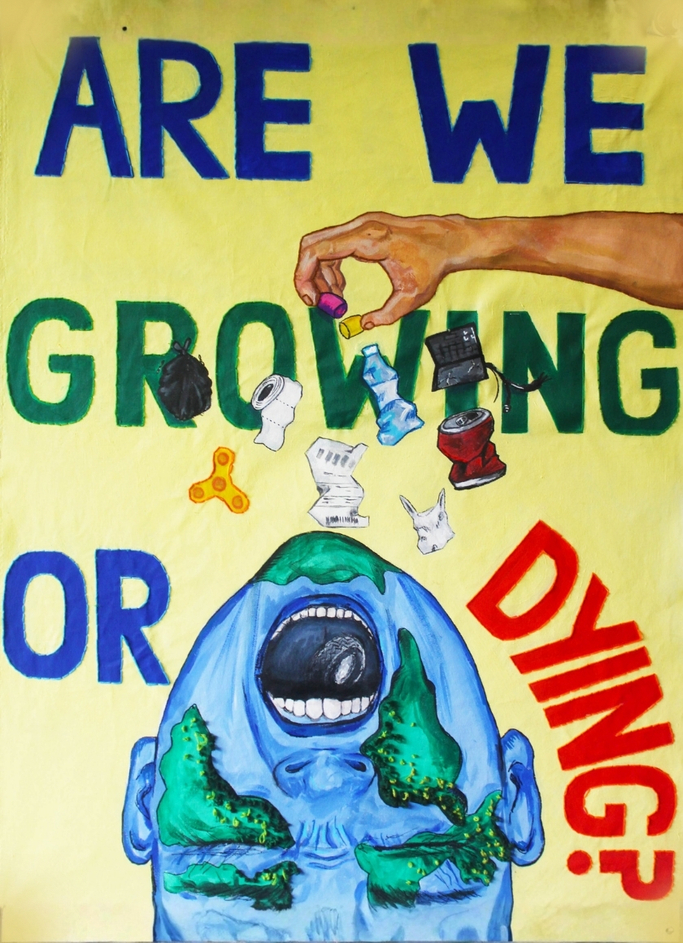
Are We Growing Or Dying?, 2026
‘Are we growing or dying?’ asks the public to think of their individual and civic responsibility to the world around them, it is both an urgent plea to act now, before it is too late. The artwork compels us to pay stop and pay attention and to urge others to do the same, questioning mindless consumerism and greed and waking up to the world around us.
School: Greig City Academy
Artist: Annie Frost Nicholson
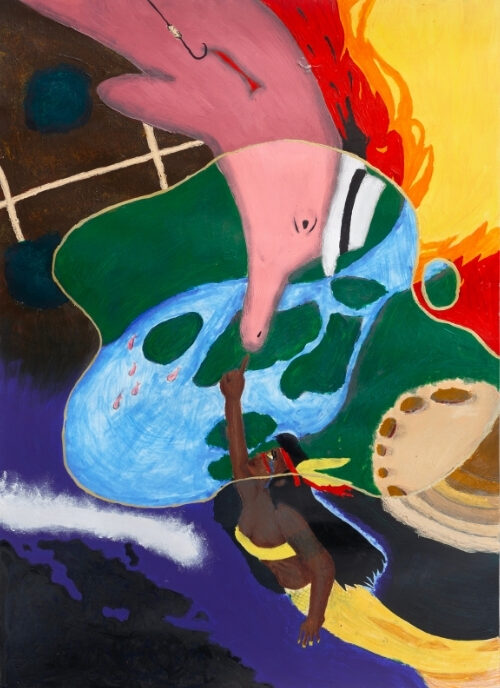
Untitled, 2026
The work brings together two central figures from Amazonian folklore, Iara and the Boto-cor-de-rosa (Pink River Dolphin), whose legends share the theme of enchantment that seduces and leads to loss. Iara, similar to mermaids in other cultures, appears as a woman of hypnotic beauty who, singing and combing her hair in the moonlight, lures men to the bottom of rivers. The Boto-cor-de-rosa, in turn, transforms into a man on party nights, seduces women and returns to the waters, leaving behind a trail of absence and guilt displaced onto the myth. There is an obvious irony in the encounter between these two entities: both are traditionally narrated as dangerous, seductive and responsible for the tragedies of others. By placing them face to face, the work challenges these narratives and exposes their moralising character, often used to control bodies, desires and behaviours, especially those of women. The myth ceases to be mere fantasy and begins to operate as social criticism, revealing how folklore also reflects inequalities, silencings and symbolic violence present in the history of the Amazon.